
I was standing in line at a coffee shop when I realized how sloppy most of us are with digital security. People tapping cards, pulling phones, saying their passwords out loud like it’s no big deal. Weird, right? My gut tightened. Storing private keys on a laptop or mobile app felt suddenly irresponsible. That nagging feeling stuck with me.
Here’s the thing. Private keys are the only proof of ownership you have in crypto. Lose them, and your funds are gone—no reset button, no customer service line to call. So why do so many solutions still rely on fragile hardware, complicated seed phrases, and UX that looks like it was designed by committee? I’m biased, but this part bugs me. We can do better.
Let me walk you through a more practical approach: hardware wallets that are actually convenient to use day-to-day—think contactless smart cards that fit in your wallet. Short version: they remove large attack surfaces while making payments nearly effortless. Longer version: read on—this matters if you carry crypto or plan to.
Why private keys fail on phones and desktops
Phones and computers are amazing. And also owned by all sorts of adversaries—malware, zero-days, careless updates. On one hand, they’re convenient. On the other, they’re exposed. Initially I thought the tradeoff was acceptable. But then I watched a friend get drained after a drive-by malware attack that captured a hot wallet’s keystrokes. Oof.
Hot wallets are fine for small, everyday amounts. But when you start talking meaningful holdings, they introduce too many weak links: backup phrases left in cloud notes, clipboard hijackers, and phishing sites that look shockingly real. These are not theoretical problems. They happen daily.
Hardware wallets fix many of those issues by isolating the private key in a secure enclave. But not all hardware wallets are equal. Some are bulky. Others require cables and a complex companion app. If a tool is secure but inconvenient, people avoid it. That’s human nature.
Contactless smart-card wallets: the middle ground
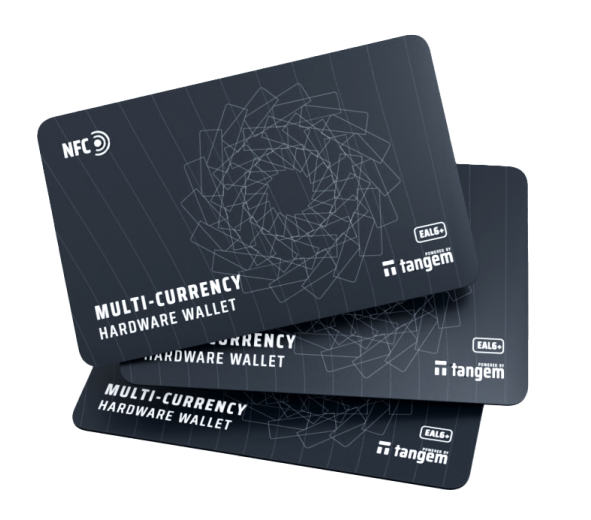
Okay, so check this out—imagine a hardware wallet that’s as thin as a credit card, supports NFC, and signs transactions without exposing keys to the phone. You tap it. You confirm on the device. You’re done. No wires, no seed phrase awkwardness staring you in the face at a café. Sounds nice, right?
There are products in this space that really get it right. One that I’ve placed on my recommendation list after trying a few is tangem. Their approach is straightforward: the private key is generated and stored inside the card’s secure element and never leaves it. The card is tamper-resistant. You sign transactions via NFC with a companion app, and the signing happens securely on the card itself.
My instinct said “too good to be true” at first. But then I used it. The UX is simple—tap, approve, done. No phrase-writing frenzy. No seed phrase on a sticky note. No USB dongles that you lose. There are tradeoffs, sure; we’ll talk about those. But overall, this model reduces the human errors that actually cause most losses.
What to watch out for (because nothing’s perfect)
On one hand, smart-card wallets drastically cut remote attack surfaces. Though actually—wait—if you lose the card, then what? Some cards offer backup cards, social recovery schemes, or secure cloud-based recovery options; others stick to the cold-storage philosophy and expect you to manage spares. Decide what risk model fits you.
Another wrinkle: supply chain attacks. If a card is tampered with before it reaches you, it could be compromised. So buy from trusted vendors, verify packaging, and understand provenance. (Yes, that’s boring, but sadly necessary.)
Also, contactless relies on NFC or similar. That means you need a device to interface—your phone. The app’s security matters. Make sure the companion app is open to audits, has a healthy community, and a good update cadence. No one feature is a silver bullet.
Practical tips for private key hygiene with smart cards
– Use multiple cards for redundancy. Keep one in a safe, one in a different location. Redundancy saves lives—well, savings.
– Prefer factory-sealed purchases and verify device authenticity. If it looks off, send it back.
– Check firmware and support transparency. Devices with clear audit trails and public security assessments are preferable.
– Keep small amounts in hot wallets for everyday use; move the bulk to cards.
The UX advantage: how contactless changes behavior
Behavior drives security more than tech. If a secure option is cumbersome, users will discard it for convenience. A slick tap-to-pay card reduces friction so people actually use it. That’s massive. When security becomes natural, mistakes drop. My observation: the fewer steps between intention and secure action, the better the outcomes.
One small anecdote: after I started using a contactless card for a few test transactions, I noticed I checked transaction details more carefully. Why? Because tapping made it feel physical and deliberate. It removed the weird cognitive distance that screens sometimes create.
FAQ
Is a contactless smart-card as secure as a traditional hardware wallet?
Yes, in many respects. A well-designed card stores keys in a secure element and performs signing internally, similar to other hardware wallets. The main differences are the form factor and the interface (NFC vs USB). Security depends on implementation, supply chain, and user practices.
What happens if I lose the card?
It depends. Some systems provide backup cards or recovery mechanisms. Others rely on you keeping spares. Plan your redundancy strategy before storing significant funds. Treat the card like cash or a passport—replaceable only with prep.
Can these cards be used for contactless payments like a debit card?
Not directly in the sense of merchant NFC payments (unless the product specifically supports tokenized payments). They’re built to sign blockchain transactions via NFC with a companion app, which is different from contactless bank transactions. Still, the tap-to-authorize model is very similar and intuitive.